
Vegan vs Vegetarian Protein: The Ultimate 2026 Guide to Plant-Based Nutrition
What if the secret to mastering your nutrition isn't found in a chalky supplement, but in the comforting steam of a traditional tiffin? We know how exhausting it feels to worry about "complete" versus "incomplete" sources when you just want a meal that tastes like home. According to a 2024 survey by the Vegan Society, 44% of people find the vegan vs vegetarian protein debate confusing, especially when trying to balance a hectic work schedule with healthy habits. You want to feel strong and nourished, but you don't always have the 120 minutes needed to soak lentils and grind spices.
In this guide, you'll discover how to hit your nutritional goals using the soul-satisfying power of Indian flavours. We'll show you how simple pairings like dal and rice create a perfect amino acid profile, giving you energy without the stress of cooking. At Dabba Junction, we provide that authentic ghar ka khana experience with freshly prepared, preservative-free meals. Please remember to place your order by 5pm the day before, as we don't accept same-day requests or cater to specific dietary needs. To stay safe, enjoy your lunch by 2:30pm or dinner by 8:30pm; otherwise, refrigerate the meal immediately upon receipt and reheat it thoroughly before eating, in accordance with the Food Standards Hygiene Code. It's time to enjoy wholesome food that looks after you.
Key Takeaways
Explore the nutritional landscape of vegan vs vegetarian protein to decide whether dairy-based paneer or plant-only tofu fits your lifestyle and health goals best.
Master the art of traditional Indian food pairing to create complete proteins, ensuring your body gets every essential amino acid it needs for repair and energy.
Learn how to calculate your specific daily protein requirements and time your meals to avoid the dreaded afternoon slump during your busy Singapore work week.
Discover how our preservative-free ghar ka khana supports your health, provided you place your order by 5pm the day before to secure your fresh, standard tiffin.
Understand how to safely enjoy your freshly prepared meal by 2:30pm for lunch or 8:30pm for dinner, following our essential hygiene guidelines for refrigeration and reheating.
Table of Contents The Protein Pulse: Why the Vegan vs Vegetarian Protein Debate Matters The Great Divide: Comparing Dairy-Based and Plant-Only Sources Complete Proteins and the Art of Traditional Indian Food Pairing Hitting Your Daily Targets: A Practical Guide for Singapore Professionals Wholesome Protein, Delivered: The Dabba Junction Philosophy
The Protein Pulse: Why the Vegan vs Vegetarian Protein Debate Matters
Protein acts as the essential building block for repair and energy in your body. It is the foundation that helps you recover from a long day and keeps your muscles strong. The heart of the vegan vs vegetarian protein choice lies in where these blocks originate. Vegetarians enjoy the familiar comfort of dairy and eggs, while vegans source every gram of nutrition strictly from the plant kingdom. Many of our customers feel a bit of anxiety about stepping away from the "safety net" of dairy protein. You might wonder if you can truly thrive without paneer or curd. A 2023 report from YouGov indicated that about 7% of people in Singapore now identify as vegetarian or vegan, proving that many are successfully making this shift. At Dabba Junction, we view nutrition through the lens of Ghar Ka Khana. This means providing balanced, soul-satisfying meals that feel like they came straight from a mother's kitchen.
The Role of Protein in a Busy Professional Lifestyle
In the bustling offices of the CBD, the "afternoon slump" is a common hurdle for many professionals. This energy crash often follows a lunch that lacks enough substance to sustain the brain. Protein provides satiety, keeping you fuller for longer and preventing the temptation to reach for sugary snacks at 3pm. It stabilises your energy so you can focus on your deadlines without feeling drained. Protein bioavailability is the body’s efficiency in using nutrients. By choosing high-quality sources, you ensure your system actually absorbs the fuel you provide. We prepare our meals fresh every day to support your busy schedule. To enjoy the best quality, we recommend eating your lunch by 2:30pm and your dinner by 8:30pm.
Vegetarian vs Vegan: A Quick Snapshot
The distinction between these two paths often comes down to the ingredients that define a traditional home. A vegetarian diet includes the following staples:
Rich, soft paneer packed with calcium.
Cooling curd to aid digestion.
Golden ghee for that authentic aroma and healthy fats.
In contrast, a vegan approach relies on the incredible diversity of the earth. This includes a total reliance on legumes, nuts, and seeds to hit nutritional targets. If you are curious about the science behind this, you can explore this comprehensive guide to vegan nutrition which details how plants provide essential amino acids. Dabba Junction focuses on wholesome vegetarian and non-vegetarian comfort, ensuring you get that homely taste regardless of your preference.
We don't cater to customers with specific needs or special dietary requirements. If you're planning your meals with us, please remember our strict ordering policy. Both lunch and dinner orders must be placed one day in advance before 5pm. We don't accept same-day orders. Any changes or cancellations must also be made before this 5pm deadline, or your credits will be forfeited. If you plan to eat your tiffin later than our recommended times, please refrigerate it immediately and reheat it thoroughly before tucking in. For more details on how we operate, you can always visit our FAQ page.
The Great Divide: Comparing Dairy-Based and Plant-Only Sources
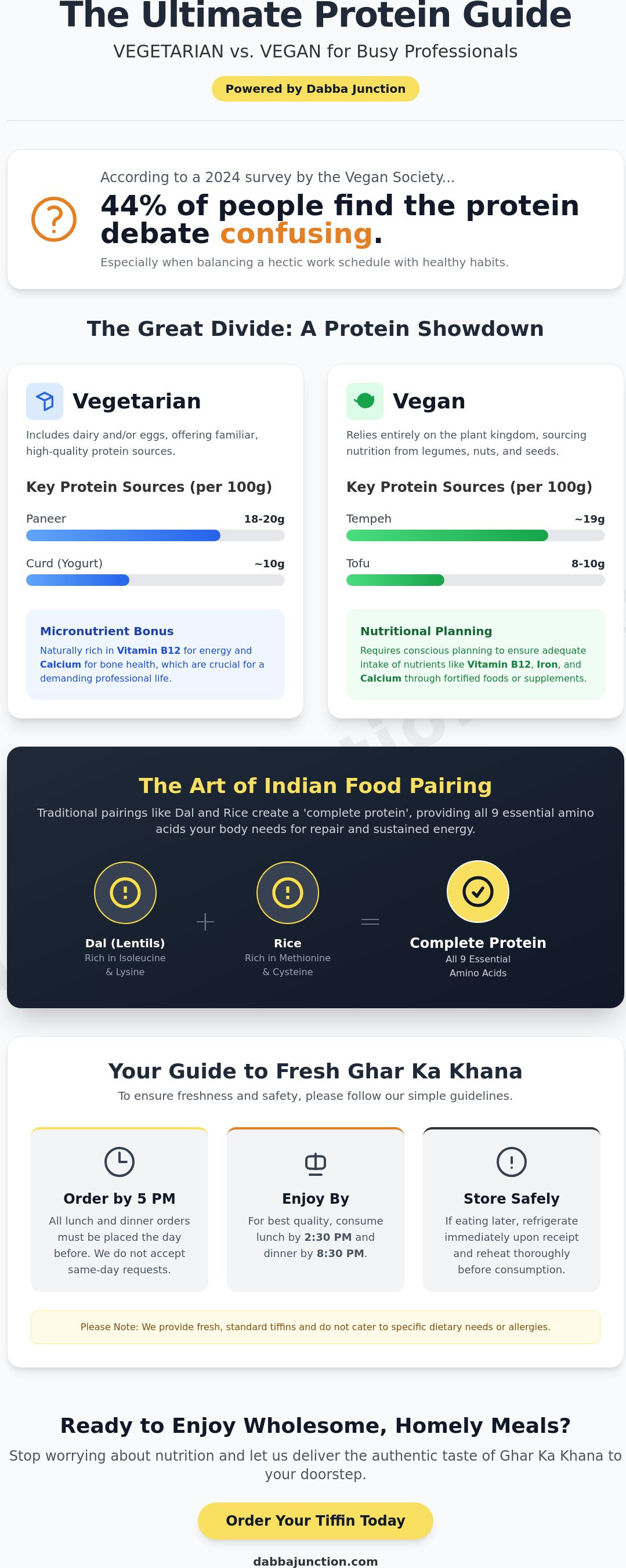
Choosing between vegan vs vegetarian protein isn't just about nutrition; it's about finding that soulful balance that keeps you going through a busy Singapore work day. When we look at protein density, paneer is a heavyweight in the vegetarian world, offering about 18 to 20 grams of protein per 100g serving. In the vegan corner, tempeh provides a similar punch with roughly 19 grams, while tofu sits a bit lighter at 8 to 10 grams. Both paths offer incredible strength, but they bring different gifts to your tiffin.
Dairy sources like curd and paneer provide a natural micronutrient bonus, particularly Vitamin B12 and calcium, which are vital for bone health and energy. If you choose a plant-only route, building a healthy plant-based diet requires a little more focus on fortified foods to ensure you aren't missing these essentials. However, vegan proteins like lentils have a secret weapon: fibre. A single cup of cooked dal provides about 15 grams of fibre, something dairy simply cannot offer. This fibre keeps your digestion smooth and helps you feel full without that heavy, post-meal slump.
Neither choice is "better" than the other. They simply require different planning strategies to ensure your body feels nourished and cared for. We believe in the power of both to create a meal that feels like a warm hug from home.
The Vegetarian Advantage: Paneer and Curd
Paneer is a staple of our North Indian heritage for a reason. It's a complete protein, meaning it contains all nine essential amino acids your body needs to thrive. In a tropical climate like ours, a side of fresh curd is more than just a tradition; it's a cooling probiotic boost that supports gut health. You can explore how we weave these wholesome ingredients into our daily specials by visiting our menu.
The Vegan Powerhouses: Lentils, Soya, and Chickpeas
Dal is the true backbone of any plant-based meal. Whether it's yellow moong or hearty black lentils, these legumes provide steady energy. Many people think you need expensive "fake meats" to hit your targets, but that's a myth. Versatile chickpeas (Chana) and soya chunks provide a wonderful, meaty texture and high protein counts without any artificial processing. It's ghar ka khana at its most honest and powerful.
We take great pride in our cooking, though it's important to remember that we don't cater to specific dietary requirements or medical needs. To keep our kitchen running smoothly, please ensure all lunch and dinner orders are placed by 5pm the day before. We don't accept same-day orders or last-minute changes, as we want to ensure every dabba is prepared with total care. If you miss the 5pm deadline for cancellations, your credits will be forfeited.
To enjoy the freshest flavours, please consume your lunch by 2:30pm and your dinner by 8:30pm. If you're planning to eat a bit later, please refrigerate your meal immediately and reheat it thoroughly before tucked in. For more details on how we serve you, do check our FAQ or our Terms and Conditions.
Complete Proteins and the Art of Traditional Indian Food Pairing
When you're looking at the vegan vs vegetarian protein debate, the conversation often turns to "complete proteins." Your body needs 21 amino acids to function, but it can't make nine of them on its own. These are called essential amino acids. Animal products like eggs or milk contain all nine in one go, making them complete. Most plant sources are "incomplete" because they lack one or two of these vital building blocks. However, our ancestors figured out a clever workaround called protein complementation centuries ago.
By combining two different incomplete protein sources, you create a complete amino acid profile. This isn't just science; it's the soul of the traditional Indian tiffin. We've always paired specific grains with pulses to ensure every meal is balanced and nourishing. At Dabba Junction, we follow these age-old traditions to bring you ghar ka khana that fuels your body properly. We don't offer special dietary menus because our standard traditional pairings are already designed for optimal health.
Why Dal and Rice is a Nutritional Masterpiece
The classic combination of dal and rice is more than just comfort food. It's a biological masterstroke. Grains like rice are typically low in an amino acid called lysine but high in methionine. Pulses and lentils are exactly the opposite; they're packed with lysine but low in methionine. When you eat them together in a single dabba, they fill each other's gaps. This creates a protein profile that's very similar to what you'd find in animal products. For a deeper look at these numbers, check out our Sources of Protein in Vegetarian Diet guide. We take pride in serving these balanced meals, but remember to place your order by 5pm the day before. We never accept same-day orders because quality takes time.
Soya and Quinoa: The Vegan Exceptions
While most plants need a partner, a few rare stars are complete on their own. Soya is the heavyweight champion here. It provides roughly 36g of protein per 100g, making it one of the most efficient ways to hit your targets in the vegan vs vegetarian protein standoff. Quinoa is another modern favourite that contains all nine essential amino acids. Incorporating these into an Indian-inspired diet is simple; think soya chunks in a rich, spiced curry or a quinoa-based vegetable pulao.
To enjoy these meals at their best, we recommend eating your lunch by 2:30pm and your dinner by 8:30pm. If your schedule is a bit hectic and you need to eat later, please refrigerate your meal immediately. Always reheat it thoroughly before tucking in to stay safe and follow hygiene codes. If you have questions about how we handle our food or our cancellation policy, please visit our FAQ page. Remember, any changes to your order must be made before the 5pm deadline the day before, or your credits will be forfeited.
Hitting Your Daily Targets: A Practical Guide for Singapore Professionals
Getting your daily fix doesn't have to be a maths puzzle. For most of us working in the CBD or studying late, hitting those numbers is simply about consistency. You should aim for 0.8g to 1.2g of protein for every kilogram you weigh. If you weigh 70kg, that's roughly 56g to 84g daily. When looking at vegan vs vegetarian protein, the source changes but the target stays the same. We make sure our dabbas are packed with lentils, paneer, or chickpeas to help you reach these goals without the mid-afternoon slump.
Splitting your protein between lunch and dinner keeps your blood sugar steady. If you eat all your protein at night, you'll likely feel sluggish during those 3pm meetings. We've seen that professionals who balance their intake across two main meals report better focus and fewer cravings. It's about making your nutrition work for your schedule; not the other way around. Our tiffin service handles the heavy lifting so you don't have to count every gram yourself.
Managing Your Meals Around the Workday
Freshness is our promise, but it requires a bit of teamwork. You must place your orders or make any changes by 5pm the day before. We don't accept same-day orders because we plan our kitchen prep around the freshest ingredients available. If you miss this 5pm deadline, credits for that meal will be forfeited. Once your tiffin arrives, please enjoy it by 2:30pm for lunch or 8:30pm for dinner. If you're stuck in a call, pop it in the fridge immediately. Always reheat it thoroughly before eating to stay safe. Please remember we can't cater to specific medical needs or dietary requirements; we focus on authentic, soulful home cooking for everyone.
The Convenience Factor: Why Tiffin Services Beat Meal Prep
Cooking for yourself sounds great until you're scrubbing pots at 11pm. Between grocery shopping and the inevitable nutrient loss from wilted veggies, DIY prep has hidden costs that eat into your rest time. A subscription automates your health goals. You get ghar ka khana delivered to your doorstep, so you can spend your weekends relaxing instead of chopping. It's a simple way to settle the vegan vs vegetarian protein debate in your own kitchen without the stress. We treat every meal like it's being served at our own family table.
Ready to simplify your workday nutrition? You can view our offers to find a budget-friendly plan that fits your protein needs perfectly.
Calculate: Multiply your weight in kg by 1.0 for a balanced daily goal.
Timing: Order by 5pm the day before to secure your fresh dabba.
Safety: Refrigerate immediately if you aren't eating by 2:30pm or 8:30pm.
Consistency: Automated subscriptions ensure you never miss a protein-rich meal.
Wholesome Protein, Delivered: The Dabba Junction Philosophy
At Dabba Junction, we've built our kitchen on a simple, heartfelt promise: food that feels like home. We call it "Ghar Ka Khana." Every dabba we prepare is more than just a meal; it's a piece of our heritage designed to fuel your body and comfort your soul. We know that a busy life in Singapore can make it hard to maintain a balanced diet, so we act as your dependable neighbour who happens to be an expert in the kitchen.
We don't believe in shortcuts or chemical additives. You won't find a single preservative in our food. Instead, we rely on the vibrant flavours of freshly ground spices and high-quality ingredients sourced with care. This commitment to freshness ensures that whether you're looking for vegan vs vegetarian protein, you're getting the most nutrient-dense version of every lentil, chickpea, and vegetable we cook.
To keep our kitchen running smoothly and ensure every meal is cooked to order, we follow a strict scheduling policy. All orders must be placed by 5pm one day in advance. We never accept same-day orders because our team starts preparing your fresh ingredients well before the sun comes up. This same 5pm deadline applies to any cancellations or modifications. If you miss this window, your credits will be forfeited, as we cannot entertain last-minute changes once our chefs have begun their work.
Safety is our top priority. We prepare everything fresh for immediate delivery, so we recommend you enjoy your lunch by 2:30pm and your dinner by 8:30pm. If your schedule is a bit frantic and you can't eat straight away, please place your meal in the fridge immediately. Always reheat it thoroughly before you tuck in, keeping in line with the Food Standards Hygiene Code. Please keep in mind that we provide a traditional service and do not cater to customers with specific needs or special dietary requirements.
Authentic Flavours, Reliable Service
Our menu celebrates the rich diversity of North Indian cuisine through our dedicated Veg and Non-Veg plans. We've carefully calibrated our portions to be balanced and satisfying, making them ideal for busy professionals, energetic kids, and students living away from home. We take immense pride in our cultural roots, bringing you the authentic taste of a traditional tiffin service without the stress of cooking. If you're curious about where we deliver, you can find a full list of delivery zones in Singapore on our FAQ page.
Your Next Step to a Healthier Plate
Deciding between vegan vs vegetarian protein often comes down to personal ethics and lifestyle, but the real secret to fitness is consistency and quality. We provide the reliable, wholesome foundation you need to reach your health goals without sacrificing the soul of your meal. It's time to swap the processed snacks for a warm, home-cooked tiffin that truly looks after you. We invite you to explore our subscription tiers today and join our growing family. Before you start your journey with us, please take a moment to review our Terms and Conditions regarding order changes and service policies.
Fuel Your Future with Authentic Plant-Based Nutrition
Choosing between vegan vs vegetarian protein doesn't have to be a struggle when you rely on the wisdom of traditional Indian food pairing. We've seen how combining grains and legumes provides all nine essential amino acids your body needs for a productive day in Singapore. Whether you choose dairy or stick to plants, hitting your 2026 nutrition goals is simple with our authentic home-cooked meals. We take pride in being Singapore’s first authentic Indian tiffin delivery service, using only freshly ground spices and zero preservatives in every meal we prepare.
We handle the cooking while you focus on your busy schedule. Please remember to place your order or make changes by 5pm one day in advance; same-day orders are never accepted and late cancellations mean credits are forfeited. Our meals are prepared fresh for you to enjoy by 2:30pm for lunch or 8:30pm for dinner. If you're eating later, you must refrigerate your meal immediately and reheat it thoroughly to follow the Food Standards Hygiene Code. While we don't cater to specific dietary requirements, we promise a wholesome meal that feels like home.
We look forward to serving you a warm, soul-satisfying meal at your doorstep very soon.
Frequently Asked Questions
Is vegan protein as good as vegetarian protein for muscle building?
Yes, vegan protein is just as effective as vegetarian options for building muscle as long as you eat a variety of plant sources. Research shows that consuming 1.6 grams of protein per kilogram of body weight supports muscle growth regardless of whether the source is plant-based or dairy-based. When comparing vegan vs vegetarian protein, the key is ensuring you get a full range of amino acids from foods like lentils, beans, and soy.
How much protein does a typical Indian vegetarian meal provide?
A standard Indian vegetarian dabba usually provides between 18 and 25 grams of protein per serving. This total comes from a balanced combination of 150 grams of cooked dal, two whole wheat rotis, and a portion of seasonal sabzi. We design our meals to mirror the traditional ghar ka khana that has nourished families for generations, providing a steady release of energy for your afternoon.
Can I get enough protein if I only eat Dal and Sabzi?
You can certainly meet your nutritional needs with dal and sabzi if you pair them with grains like rice or rotis. A single bowl of cooked mung dal contains about 7 to 9 grams of protein, and when combined with wheat, it creates a complete protein profile. This simple, time-tested combination is a staple of plant-based nutrition that helps you maintain a healthy balance of vegan vs vegetarian protein in your daily diet.
What happens if I miss the 5pm deadline for my meal order?
If you miss the 5pm deadline, your order or cancellation won't be processed for the next day. We require all bookings and changes to be made at least one day in advance before 5pm so our cooks can prepare fresh ingredients. If this deadline passes, your credits for that meal will be forfeited, as we don't accept same-day orders or last-minute requests under any circumstances.
How should I store my tiffin if I cannot eat it by 2:30pm?
You must place your tiffin in the refrigerator immediately if you aren't able to eat your lunch by 2:30pm. Because we don't use any preservatives in our cooking, the food stays fresh best when kept cold. When you're ready to eat later, make sure you reheat the meal thoroughly until it's steaming hot to comply with the Food Standards Hygiene Code.
Does Dabba Junction offer specific high-protein vegan-only plans?
We don't offer specialised high-protein or strictly vegan-only meal plans. Our service focuses on providing authentic, home-style meals that are fixed for the day. We don't cater to customers with specific dietary requirements or medical needs, as our kitchen is dedicated to the traditional recipes that define our cultural heritage.
Are there any preservatives in the protein sources used by Dabba Junction?
There are absolutely no preservatives or hidden chemicals in any of the protein sources we use. We source 100% natural lentils, chickpeas, and vegetables, and we flavour them with spices that are ground fresh in our own kitchen. This ensures that every bite of your dabba tastes exactly like the food you'd find on a family dinner table.
Is it safe to reheat my meal multiple times?
It's not safe to reheat your meal more than once. You should only heat the food you intend to eat immediately to maintain its nutritional value and ensure it remains safe for consumption. Repeated heating can spoil the delicate flavours of our freshly prepared dishes and increases the risk of foodborne illness, so it's best to enjoy it hot the first time.
Comments