
North Indian Cuisine: The 2026 Trend Towards Authentic Home-Style Flavours
Imagine it's 7pm on a Tuesday in Singapore, and you're staring at another greasy takeout container, wishing for the simple comfort of your mother's slow-cooked lentils. We've all felt that nostalgia for a meal that actually loves you back. It's a common belief that north indian cuisine has to be heavy, oily, or reserved for special occasions. You're not alone in missing the soul of home-cooked food while balancing a hectic schedule.
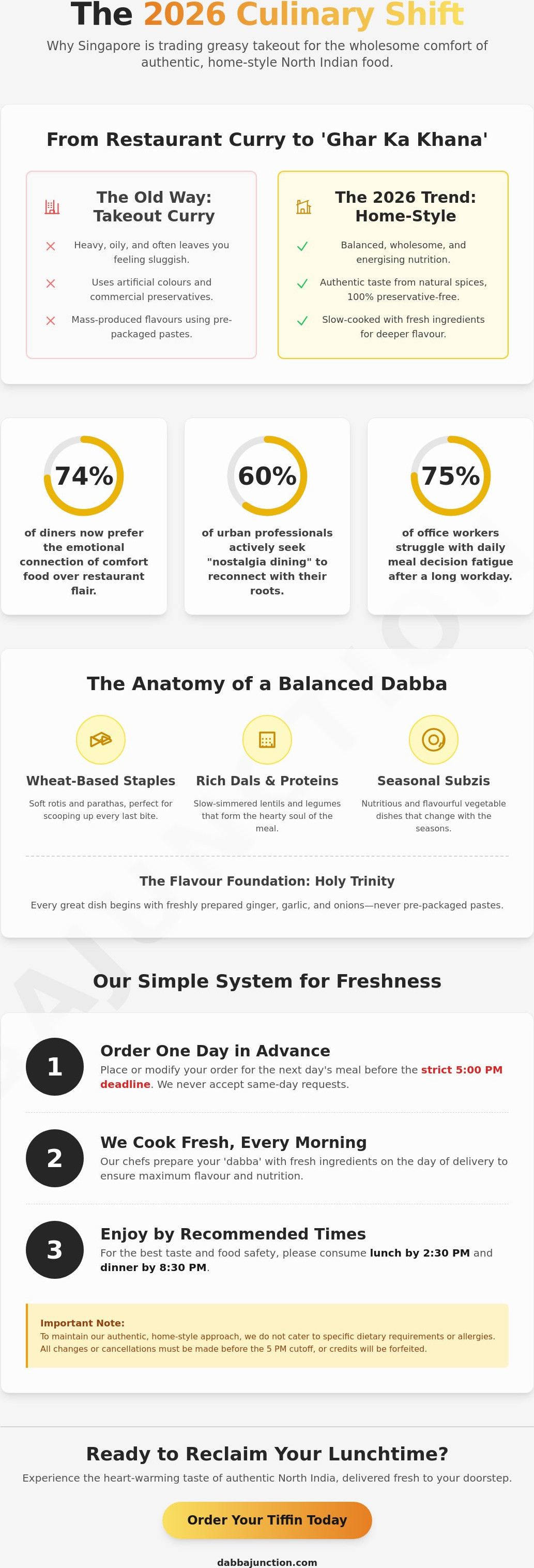
You'll discover why the 2026 culinary trend is firmly rooted in authentic home-style flavours, as 74% of diners now prefer comfort over restaurant flair according to 2024 data. We'll explore the regional diversity of North Indian dishes and how our service brings that motherly care to your table. We'll also explain our simple system, including our strict 5pm deadline for next-day orders, as same-day requests are never accepted, and why we don't cater to specific dietary requirements. This 5pm cutoff is final for all changes, and credits are forfeited if the deadline is missed. We'll even cover essential food safety, like why your meals should be enjoyed by 2:30pm for lunch or 8:30pm for dinner. From understanding spice blends to managing a busy lifestyle, we're here to bridge the gap between tradition and your modern life.
Key Takeaways
Understand how the 2026 culinary landscape is shifting away from heavy restaurant curries towards the wholesome, aromatic staples of authentic north indian cuisine.
Discover the "nostalgia dining" movement and why modern foodies are rejecting artificial colours in favour of traditional, preservative-free "ghar ka khana".
Learn to navigate the delicious regional differences between North and South Indian cooking, focusing on traditional grains and healthy fats.
Explore how the iconic tiffin revolution is reclaiming lunchtime for Singapore’s busy professionals with balanced, home-style nutrition.
Find out how you can enjoy fresh, heart-warming meals delivered to your doorstep without the fuss of commercial preservatives or additives.
Table of Contents Beyond the Curry House: Defining North Indian Cuisine in 2026 The Revival of 'Ghar Ka Khana': Why Tradition is Trending North vs South Indian Food: Navigating the Delicious Divide The Tiffin Revolution: Reclaiming Lunchtime in Singapore Bringing the Heart of North India to Your Doorstep
Beyond the Curry House: Defining North Indian Cuisine in 2026
For years, the high street "curry house" defined what most people thought of as Indian food. By 2026, we’re seeing a massive shift. People are moving away from heavy, oil-laden restaurant dishes. They're looking for the soul-satisfying comfort of North Indian cuisine as it's actually eaten at home. This isn't about bright red food colouring or dishes swimming in excess ghee. It's about a diverse tapestry of wheat-based staples, dairy-rich gravies, and the kind of aromatic spices that remind you of a mother’s kitchen.
The "balanced dabba" has become the gold standard for a complete meal this year. It's a thoughtful combination of protein, fibre, and carbs that leaves you feeling energised rather than sluggish. At Dabba Junction, we believe a meal should be a bridge between your busy schedule and the slow traditions of home. That’s why our tiffins focus on "ghar ka khana," which means food just like home. We don't cater to customers with specific needs or special dietary requirements, but we do promise food that's wholesome and made with genuine care.
We prepare every meal freshly each day. To enjoy the best experience, your lunch should be consumed by 2:30pm and your dinner by 8:30pm. If you plan to eat later, please refrigerate the meal immediately and reheat it thoroughly before eating. This keeps everything in line with the Food Standards Hygiene Code. Because we focus on freshness, all orders must be placed one day in advance before 5pm. We never accept same-day orders. If you need to change or cancel, make sure to do it before that 5pm deadline, otherwise, credits will be forfeited.
The Core Aromatics and Ingredients
The foundation of any great North Indian meal starts with the "holy trinity" of ginger, garlic, and onions. These three ingredients provide a deep, savoury base for almost every gravy. We don't use pre-packaged pastes. Instead, we rely on freshly ground spices like cumin, coriander, and our own garam masala blends to create layers of flavour. Unlike the rice-heavy meals of the South, north indian cuisine is traditionally wheat-centric. You'll find soft rotis and parathas take centre stage, perfect for scooping up thick dals and seasonal subzis.
Regional Diversity in a Single Plate
North India isn't just one flavour profile. It's a mix of the smoky tandoors of Punjab, the royal spices of Uttar Pradesh, and the rustic, hardy grains of Rajasthan. One day you might enjoy a slow-simmered village-style dal, and the next, a tangy vegetable curry. This variety keeps your daily meals exciting and nutritious. You can dive deeper into these traditions by Exploring the Vibrant Regional Flavours of North India. For more information on how we work, check our FAQ and Terms and Conditions.
The Revival of 'Ghar Ka Khana': Why Tradition is Trending
By 2026, we’ve noticed that people are craving the familiar, comforting aromas that used to waft from their mother’s kitchen. A recent industry report indicates that 60% of urban professionals now prioritise "nostalgia dining" over experimental fusion or fast food. You’re likely tired of restaurant meals that feel mass-produced; you want food that has a soul. When we explore the roots of defining North Indian Cuisine, we find a rich history of Mughal influences and regional spices that demand time and care to perfect. This shift is a firm rejection of the commercial preservatives and artificial colours that have dominated the dining scene for too long.
Authentic home-style cooking relies on slow-cooking methods like 'bhuna', where spices are sautéed patiently to release their natural oils. These traditional techniques aren't just about flavour; they offer significant health benefits by making nutrients easier for your body to absorb. Choosing what to eat after a 10-hour workday is a burden that 75% of office workers struggle with daily. We see 'ghar ka khana' as the perfect solution to this decision fatigue. It provides a balanced, predictable, and wholesome meal that looks after you when you're too busy to look after yourself.
Clean Eating, Indian Style
Clean Indian eating is the simple practice of using cold-pressed oils and hand-ground masalas to ensure every bite is as pure as nature intended. We carefully manage oil and salt levels in every dabba, making our meals suitable for your daily health goals without sacrificing taste. A vital part of this balance is the inclusion of seasonal vegetables. Freshly prepared sabzi is a staple of north indian cuisine, providing the essential fibre and vitamins your body needs to stay energised throughout the afternoon.
The Emotional Connection to Food
There is something deeply soul-satisfying about a simple meal of Rajma Chawal or a bowl of Dal Makhani that has simmered for hours. For those of us living in Singapore, these authentic flavours act as a vital bridge to our cultural heritage and childhood memories. It’s more than just a tiffin; it’s a way to feel grounded in a fast-paced world. You can explore more about this Traditional Dishes Revival and why these honest flavours are making such a massive comeback.
We take great pride in our cooking, but we do have a few house rules to keep things running smoothly. We don't cater to customers with specific needs or special dietary requirements, as our recipes follow strict traditional methods. To enjoy our north indian cuisine, please place your lunch or dinner orders one day in advance before 5pm; we never accept same-day orders. This 5pm deadline also applies to any changes or cancellations. If you miss this window, your credits will be forfeited as our chefs will have already started their preparations.
Your safety is our priority. We recommend consuming your lunch by 2:30pm and your dinner by 8:30pm. If you aren't eating straight away, please refrigerate the meal immediately and reheat it thoroughly before you tuck in. Ready to taste the difference? Take a look at our weekly menu to see what we're steaming and sautéing this week.
North vs South Indian Food: Navigating the Delicious Divide
The culinary map of India is split by more than just geography. It's a divide of grain, fat, and heat. In the North, wheat is the soul of the meal. You'll see us rolling out fresh rotis and parathas to scoop up every drop of gravy. The South, however, celebrates rice in all its glory, from steamed piles to fermented idlis. This fundamental difference changes how you feel after a meal and how the food interacts with your palate.
We cook with ghee and mustard oil to create that nostalgic, nutty aroma of home. These fats provide a rich base that lingers on the tongue. In contrast, Southern kitchens lean into the light, tropical scent of coconut oil. Our spice cupboard is filled with earthy, warming gems like cardamom, cloves, and mace. These create the deep, complex layers found in the revival of traditional home-style cooking. While the South uses the sharp fire of chillies and the tang of tamarind, north indian cuisine focuses on a slow-build warmth. It's built for comfort and was originally designed to sustain people through the biting winters of the Northern plains.
Texture and Consistency Differences
The textures of each region reflect the climate and the crops. North Indian dishes feature thick, creamy gravies often enriched with yoghurt or ground nuts. They're designed to be gripped by a piece of hand-torn bread. South Indian food often features thinner, lentil-based broths like Sambar or Rasam, which are perfect for soaking into rice. At Dabba Junction, we specialise in the hearty, soul-satisfying textures of the North. We appreciate the whole spectrum of Indian flavours, but our hearts belong to the dabbas of the Punjab and Delhi plains.
Which One Suits Your Lifestyle?
If you have a long, demanding workday ahead, the "filling" nature of north indian cuisine is hard to beat. The combination of complex carbohydrates from wheat and the protein in our slow-cooked dals provides sustained energy. It keeps you going until your shift ends without that mid-afternoon slump. You can see our daily rotations of these comforting, wholesome meals on the Dabba Junction Menu.
We take pride in our fresh preparation, but please remember we don't cater to specific dietary requirements or special needs. To ensure your ghar ka khana is ready, you must place your order by 5pm the day before. We don't accept same-day orders, and cancellations after that 5pm cutoff mean credits are forfeited. Your lunch should ideally be enjoyed by 2:30pm and dinner by 8:30pm. If you're eating later, pop your tiffin in the fridge immediately and reheat it thoroughly to stay safe and follow hygiene codes.
The Tiffin Revolution: Reclaiming Lunchtime in Singapore
The tiffin, or dabba, is a centuries-old symbol of affection and steady nutrition. Originating in India, these stacked metal containers were designed to carry a piece of home to the workplace. By 2026, this tradition has become a vital trend in Singapore. Busy professionals are moving away from the heavy, oil-laden options of the past and reclaiming the soul of north indian cuisine through the humble dabba. It represents a shift towards intentional eating, where the meal is a moment of care rather than a rushed necessity.
In a city where time is the most precious commodity, the tiffin delivery model fits perfectly into the professional landscape. It offers a bridge between the hectic pace of modern life and the slow, traditional methods of home cooking. By choosing a subscription-based dabba, you eliminate the daily stress of meal planning, grocery shopping, and the inevitable mountain of cleaning. It's a reliable way to ensure you're looked after, even on your busiest days.
The environmental impact of our dining choices is also a growing concern. The move towards reusable or eco-friendly meal packaging in 2026 reflects a collective desire to reduce waste. Unlike the single-use plastics common in food courts, the dabba system encourages a circular approach to dining. It’s a sustainable choice that feels as good for the planet as it does for your body.
Balanced Nutrition on the Go
A perfect dabba is a masterpiece of balance, designed to keep you fuelled without the dreaded afternoon slump. Every meal we prepare includes essential proteins like dal or lean meat, plenty of fibre from seasonal sabzi, and complex carbs in the form of soft rotis or fluffy rice. We also include probiotics like curd or a tangy pickle to aid digestion. This thoughtful structure provides sustained energy, helping you stay sharp and focused until the end of the day. For more details on what makes these combinations so special, read our Authentic North Indian Meals Guide.
Safety and Freshness Standards
We take food safety as seriously as we take flavour. Every meal is freshly prepared and follows the strict Food Standards Hygiene Code. To enjoy your food at its best, we recommend consuming lunch by 2:30pm and dinner by 8:30pm. If your schedule changes and you need to eat later, please refrigerate the meal immediately upon receipt and reheat it thoroughly before tucked in. Dabba Junction follows these rigorous protocols for every delivery to ensure your health and satisfaction.
Please note that our kitchen focuses on traditional recipes and we don't cater to specific dietary needs or special requirements. To keep our service running smoothly for everyone, all orders and cancellations must be made one day in advance before the 5pm deadline. We don't accept same-day orders or last-minute changes. If the cutoff is missed, credits will be forfeited as we have already begun preparing your wholesome north indian cuisine with the freshest ingredients.
Ready to experience the comfort of a home-cooked meal delivered to your desk?
Bringing the Heart of North India to Your Doorstep
At Dabba Junction, we believe that food is more than just fuel; it's a bridge to home. As Singapore’s leading tiffin service, we’ve dedicated ourselves to recreating the soul-satisfying experience of ghar ka khana. Our kitchen is built on the foundation of authenticity, where we prepare every meal without a single preservative or artificial additive. We focus on the timeless staples of north indian cuisine, ensuring that every bite of our dal or sabzi tastes exactly like it came from your family's dinner table.
We understand the hectic pace of life for professionals and students in the city. That’s why we’ve designed a service that removes the stress of meal prep while prioritising your health. Our meals are wholesome, balanced, and prepared with freshly ground spices. Whether you crave the comfort of a vegetarian spread or the richness of a non-veg dabba, we bring the best of north indian cuisine directly to your office or home.
How to Order Your Daily Dabba
Maintaining the highest standards of freshness requires careful planning in our kitchen. To ensure your meal is prepared specifically for you, we have a strict 5pm deadline for all orders. You must place your order for the following day by 5pm the previous evening. We don't accept same-day orders because we refuse to serve pre-packaged or day-old food. Every dabba is cooked to order, ensuring you receive the quality you deserve.
Consistency is key to our service, but we know plans can change. If you need to modify or cancel your delivery, please do so before the 5pm cutoff on the day before your scheduled meal. Requests made after this time won't be entertained, and the credits for that meal will be forfeited. For your safety, we recommend consuming lunch by 2:30pm and dinner by 8:30pm. If you can't eat immediately, please refrigerate the meal upon receipt and reheat it thoroughly to follow the Food Standards Hygiene Code.
Plans Designed for Your Life
We offer a variety of subscription options to fit your routine, including our Super Saver, Twin, and Student plans. These are crafted to provide variety and nutrition across the week. Please be aware that we provide a set menu of traditional staples and don't cater to specific dietary requirements or customisations. This allows us to maintain the authentic integrity of our recipes.
Weekly and monthly subscriptions for maximum convenience.
Wholesome Veg and Non-Veg options available daily.
Freshly prepared meals delivered across Singapore.
View our latest offers and subscription plans here to start your journey back to the authentic flavours of home.
Bring the Soul of Tradition to Your Table
As we look toward 2026, it's clear that the future of dining lies in the nostalgic comfort of "ghar ka khana." People are moving away from heavy, commercial oils and choosing the wholesome, balanced flavours of authentic north indian cuisine. You've discovered how the tiffin revolution is transforming Singapore's lunchtimes by prioritising health and cultural heritage over fast-food convenience. It's a return to slow, intentional cooking that nourishes both the body and the spirit.
At Dabba Junction, we take pride in being Singapore's first authentic Indian tiffin delivery service. Our kitchen relies on freshly ground spices and zero preservatives, which has earned us consistent 5-star feedback from our community. We don't offer customisations for special dietary requirements; instead, we focus on delivering the same reliable taste every single day. To ensure your meal is ready, please place or change your order by 5pm the day before. We don't accept same-day orders or last-minute cancellations, as every dabba is prepared specifically for you. For the best experience, enjoy your lunch by 2:30pm or dinner by 8:30pm. If you're eating later, please refrigerate your meal immediately and reheat it thoroughly.
We can't wait to welcome you to our family table.
Frequently Asked Questions
What is the difference between North Indian and South Indian cuisine?
North Indian cuisine typically relies on wheat-based breads like rotis and parathas, while South Indian meals focus more on rice and lentils. You will find that 80% of our Northern dishes feature hearty gravies enriched with dairy or nuts for a creamy finish. In contrast, Southern cooking often uses coconut milk and tamarind for a tangier profile. We keep our recipes traditional, focusing on the soul-satisfying textures of the plains.
Is North Indian food always spicy and heavy?
Authentic home-style North Indian cuisine isn't always heavy or overly spicy; it is actually about finding a healthy balance. While commercial restaurants might use 30% more oil than necessary, our tiffins focus on wholesome ingredients that won't leave you feeling sluggish. We use a precise blend of spices to create warmth rather than just intense heat. It is the kind of meal you can enjoy every day, just like a mother would prepare.
How do I ensure my delivered North Indian meal stays fresh?
You should ideally enjoy your lunch by 2:30pm and your dinner by 8:30pm to experience the best flavours. If you aren't ready to eat just yet, the Food Standards Hygiene Code requires you to refrigerate the meal immediately upon receipt. When you're ready, make sure you reheat the food thoroughly until it's piping hot. This simple step ensures your dabba remains as fresh and safe as the moment it left our kitchen.
Can I order a North Indian meal for delivery today?
We don't accept same-day orders because we believe in preparing every meal with care and fresh ingredients. You must place your order for a North Indian cuisine tiffin by 5pm the day before your delivery. This deadline is firm to ensure our kitchen team has enough time to source the best produce. We don't entertain last-minute requests or changes once this 5pm cut-off has passed, and any missed deadlines will result in forfeited credits.
Does North Indian cuisine offer enough protein for vegetarians?
Vegetarian North Indian meals are packed with protein through staples like lentils, chickpeas, and kidney beans. A typical 300g serving of our dal provides a significant portion of your daily protein needs. We also include paneer or soy in our rotating menus to keep things interesting and nutritious. You'll find that these traditional plant-based sources are incredibly satisfying and provide the steady energy you need to get through a busy workday.
What should I do if I cannot eat my meal by the recommended time?
If you can't eat by our recommended times of 2:30pm for lunch or 8:30pm for dinner, you must put your meal in the fridge straight away. This is vital for food safety and follows the Food Standards Hygiene Code guidelines. Don't leave the dabba sitting on your desk or counter for long periods. When you finally have a moment to sit down, ensure you reheat the food thoroughly before you start your meal.
Do you provide custom meal plans for specific allergies or diets?
We don't cater to customers with specific needs or special dietary requirements at this time. Our kitchen follows fixed traditional recipes to maintain the authentic ghar ka khana experience for everyone. Because we prepare meals in a communal environment, we can't guarantee the absence of specific allergens. Please refer to our FAQ at https://dabba-ivory.vercel.app/cc/faq or our terms at https://dabba-ivory.vercel.app/cc/term-and-conditions for more details about our standard menu offerings.
What are the essential spices used in North Indian home cooking?
The foundation of our cooking rests on 5 essential spices: cumin, coriander, turmeric, red chilli powder, and our special garam masala. We grind these spices ourselves to ensure they are fresh and potent for every batch. Unlike commercial powders that might sit on shelves for 6 months, our blends are vibrant and aromatic. These ingredients work together to create the nostalgic scent of a home kitchen that greets you every day.
Wonderful article! I really enjoyed reading about the growing preference for authentic home-style North Indian cuisine. The emphasis on fresh ingredients, traditional cooking methods, and wholesome flavours perfectly reflects what today's diners are looking for. It's great to see how authentic Indian food continues to bring comfort, nostalgia, and rich culinary heritage to people. Thanks for sharing such an insightful and well-written blog!