
Authentic North Indian Meals: A Guide to Home-Style Comfort in Singapore
- Apr 7
- 13 min read
Updated: Apr 7
Last Tuesday at 7:15 PM, Priya sat at her kitchen table in Jurong, exhausted and craving the comforting aroma of her mother's cooking. Instead of reaching for a heavy, greasy takeaway menu, she just wanted a steaming bowl of dal and a soft, handmade phulka. It's a struggle many of the 500,000 Indian residents in Singapore face daily; we all miss that genuine, nostalgic taste of home. Finding authentic north indian meals that don't leave you feeling sluggish can feel like a chore, especially when you've only got 20 minutes to relax before bed.
We know you're tired of oily restaurant curries and the 45 minutes spent chopping and scrubbing pans after a long shift. You deserve food that nourishes your soul and keeps you healthy without stealing your precious evening. In this guide, we'll show you how to enjoy balanced, home-style dishes every day and reclaim your time. We'll explore the essential components of a traditional dabba and how you can bring the warmth of ghar ka khana to your table with zero kitchen stress.
Key Takeaways
Rediscover the emotional heart of "Ghar ka khana" and why traditional tempering is the secret to unlocking those nostalgic flavours.
See why authentic north indian meals don't have to be heavy or unhealthy compared to standard restaurant-style dishes.
Master the 50-25-25 rule to build a perfectly balanced plate that keeps you energised and satisfied throughout the day.
Find out how to bring the comfort of a traditional home-cooked dabba into your busy Singapore lifestyle with ease.
Table of Contents The heart of North Indian meals: More than just food What defines an authentic North Indian plate? Home-style vs. Restaurant-style: The health debate Building a balanced meal: The Tiffin philosophy Your daily Dabba: Authentic North Indian meals made easy
The heart of North Indian meals: More than just food
We've all had those days where a fancy restaurant meal just won't do. You're craving something that feels like a hug in a bowl. That's the magic of "Ghar ka khana". In our culture, food is the ultimate love language. It's the scent of fresh tadka hitting hot oil and the comfort of soft rotis. When we talk about north indian meals, we aren't just discussing recipes. We're talking about memories. For many of us living in places like Singapore, these flavours are a bridge to home. This rich heritage of North Indian cuisine is celebrated globally for its aromatic depth and incredible diversity. It's a sensory experience that grounds you, no matter how far you've travelled from your roots.
The "Ghar ka khana" philosophy
The term "Ghar ka khana" literally translates to "food from the home", but the meaning goes much deeper. It represents a commitment to wellness and affection. We believe that the best food is made with a mother's touch, often called "Maa ke haath ka swad". This isn't just a sentimental phrase. It's a standard of quality that prioritises fresh, seasonal ingredients over processed alternatives. While commercial kitchens might rely on heavy creams or pre-made pastes, a true home-style meal uses spices ground in small batches. We focus on what's available at the local market right now. If you're curious about our current seasonal offerings, you can check out our latest menu to see what we've prepared for you today.
A few hallmarks of this philosophy include:
Wholesome balance: Every plate offers a mix of proteins, carbohydrates, and essential vitamins.
Zero preservatives: We avoid the additives that make restaurant food feel heavy or oily.
Personalised care: The food is cooked with the same attention a family member would give.
The evolution of the North Indian Tiffin
The "Dabba" or tiffin box is an iconic part of Indian daily life. This tradition started back in 1890 when the first Dabbawalas began delivering home-cooked lunches to office workers in Mumbai. Today, over 5,000 Dabbawalas continue this legacy, moving more than 200,000 lunch boxes every single day with incredible precision. This system wasn't just about logistics; it was about ensuring that people could enjoy a healthy, warm meal even when they were miles away from their kitchens.
In modern cities like Singapore, this tradition has adapted to fit our faster pace of life. We've moved away from the heavy, festive dishes often found in buffet lines. Instead, the focus has shifted toward balanced daily sustenance. Modern north indian meals delivered in a tiffin are designed for the working professional who needs energy without the "food coma" that follows a greasy takeaway. It’s about providing a reliable, steady rhythm of nutrition that feels like a dependable neighbour is looking after your health. We've taken that 130-year-old tradition and brought it into the present, ensuring you never have to sacrifice your cultural heritage for convenience.
What defines an authentic North Indian plate?
Authentic north indian meals aren't just about heat; they're about a delicate balance of textures and aromas that remind you of home. Every plate tells a story of regional heritage. In Punjab, you'll find rich, buttery textures and robust flavours. In contrast, Uttar Pradesh offers more delicate, aromatic profiles that rely on subtle layering. The true secret of this cuisine lies in the "Tarka," or tempering. We heat a small amount of oil or ghee and sizzle whole spices like cumin seeds and dried chillies until they pop. This process unlocks essential oils that pre-packaged powders simply can't match. It's the reason why your kitchen smells like a sanctuary the moment the cooking begins.
We believe the soul of the meal is found in the spice box. Instead of using generic store-bought blends, we use masalas ground in small batches. Commercial powders often sit on shelves for 6 to 12 months, losing their potency and vibrancy. By grinding our own coriander and cumin, we ensure every bite is punchy and fresh. This commitment to traditional methods transforms a simple dinner into a genuine experience of ghar ka khana.
The holy trinity: Dal, Sabzi, and Roti
A proper, balanced meal revolves around three essential pillars. First, there's the Dal. For most vegetarian households, this is the primary protein source, often providing between 7 and 11 grams of protein per serving. We slow-cook our lentils to ensure they're creamy without needing heavy creams. Then we have the Sabzi. We focus on seasonal vegetables like okra in the summer or cauliflower in the winter because they're packed with the specific micronutrients your body needs. Finally, there's the Roti. While restaurants often push refined flour naans, a daily North Indian meal relies on whole wheat rotis. They're easier to digest, provide essential fibre, and keep you full for longer than processed alternatives.
Aromatic spices and their benefits
We don't use spices just for their vibrant colour. Cumin, turmeric, coriander, and garam masala form the backbone of our kitchen, and each serves a purpose beyond taste. You can read more about the health benefits of spices, such as the anti-inflammatory properties found in turmeric. When we balance these spices correctly, we create deep, complex flavours without needing to drown the food in excess oil or salt. For example, a pinch of toasted cumin can aid digestion, while fresh ginger provides a natural warmth. It's a lighter, more mindful way to eat that doesn't sacrifice the soul of the dish. If you're looking for a wholesome lunch that hits all these marks, you can explore our weekly menu to see what we're preparing this afternoon.
Home-style vs. Restaurant-style: The health debate
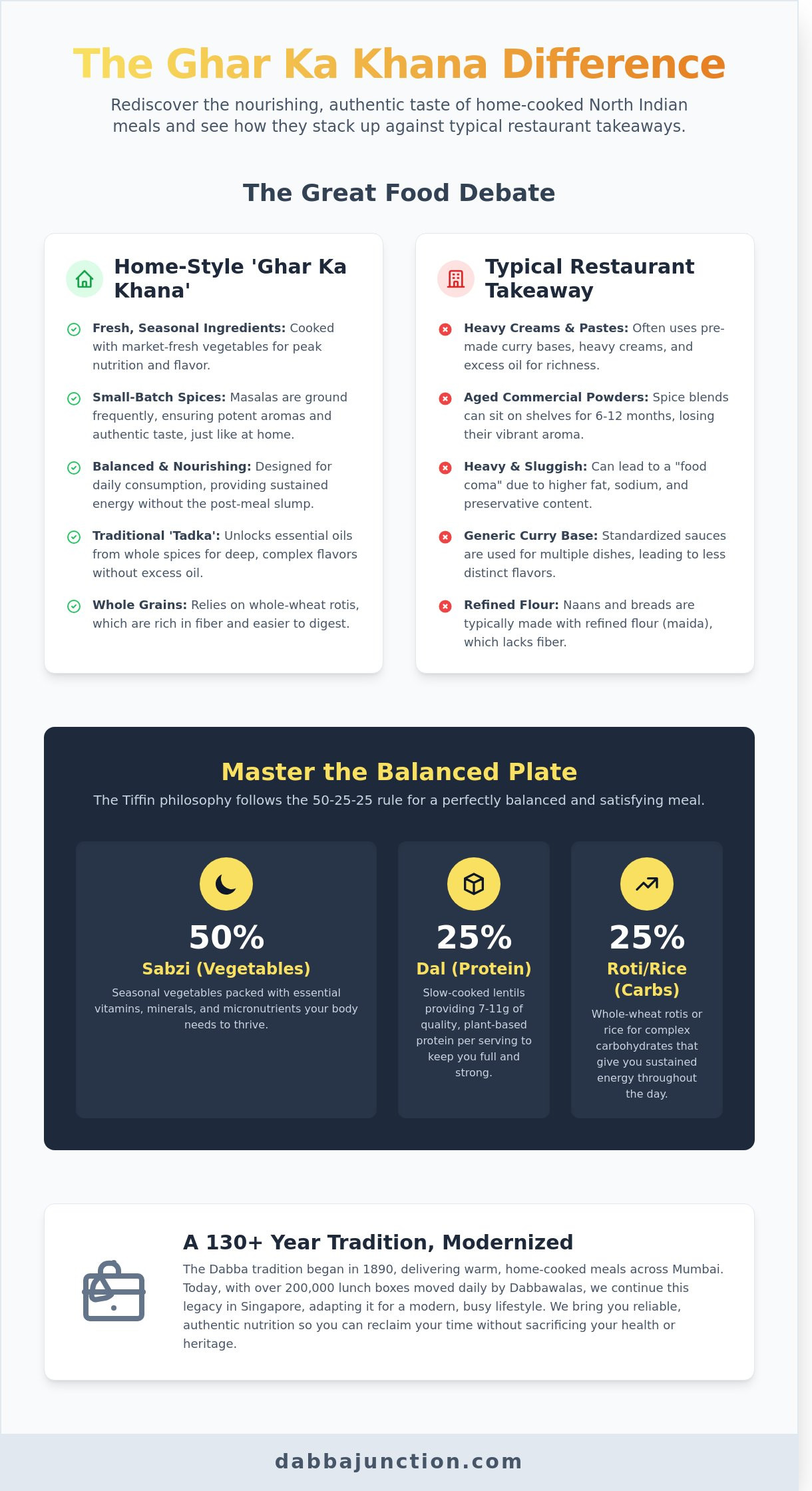
There is a common myth that north indian meals are always swimming in oil or too heavy for a regular Tuesday lunch. If you only ever eat at high-street curry houses, it’s easy to see why you’d think that. Those glowing orange gravies and buttery naans are lovely treats, but they aren't what we eat at home every day. Real home cooking is about nourishment, not just indulgence. We don't need artificial food dyes or half a tub of double cream to make a dhal taste delicious. When you strip away the restaurant theatrics, you're left with a diet that's actually quite lean and packed with plant-based proteins.
Why restaurant food feels heavy
Commercial kitchens often prioritise speed and "wow" factor over your long-term health. A typical restaurant curry can contain upwards of 45 grams of fat per serving because chefs use heavy ghee and cream to create that velvety "Makhani" texture instantly. You might also find hidden calories in those deep-fried appetisers that arrive before the main event. This leads to that familiar "food coma" feeling where you need a nap by 2 PM. In contrast, a balanced tiffin should leave you feeling light and ready to tackle your afternoon meetings. Most restaurant dishes also use pre-made "base gravies" that sit for days, whereas a home-style meal is built from scratch with fresh aromatics.
The light touch of home cooking
At home, we use different tools to get the best out of our ingredients. Pressure cooking is a staple in Indian households because it locks in up to 90% of the nutrients in lentils and beans compared to open-pot boiling. We prefer a quick sauté or a gentle steam for our vegetables to keep them crunchy and vibrant. You won't find us adding three tablespoons of extra oil just for a shiny finish. Instead, we rely on the natural oils in mustard seeds and cumin to provide that authentic flavour. Home-style cooking is a balance of nutrition and flavour without preservatives.
The secret to staying healthy while enjoying north indian meals is all about the traditional thali structure. This isn't just about variety; it’s about dietary balance. A proper dabba includes a small portion of protein, a dry vegetable dish, a serving of complex carbs like rotis, and a cooling side of yoghurt. This combination ensures your blood sugar stays stable and you feel full for longer. If you're curious about how we balance these elements in our own kitchen, you can view our daily menu to see what's cooking this week. We focus on the "ghar ka khana" philosophy, ensuring every bite feels like a hug from home rather than a heavy burden on your digestion.
Building a balanced meal: The Tiffin philosophy
At Dabba Junction, we believe a meal should do more than just fill your stomach. It should nourish your soul and keep your energy levels steady throughout the afternoon. Our philosophy centres on the traditional tiffin, a time-tested way to organise your food so it's both healthy and delicious. When you sit down to enjoy your north indian meals, you're participating in a ritual that has kept families healthy and happy for generations.
We follow the 50-25-25 rule to ensure every dabba provides a complete nutritional profile. This means half your meal consists of seasonal vegetables, while a quarter is dedicated to protein and the final quarter to complex carbohydrates. This specific ratio helps manage blood sugar levels and prevents that heavy, sleepy feeling that often follows a large lunch. It's about feeling light, focused, and fully satisfied.
Variety is the secret to a happy gut and a happy mind. We rotate our menu constantly to prevent "palate fatigue," which happens when your taste buds get bored of the same repetitive flavours. Nutritional studies suggest that people who eat a diverse range of 30 different plant-based foods per week have significantly more diverse gut microbiomes. We make sure you never have to worry about a dull diet by bringing new textures and spices to your table every day.
The anatomy of a balanced tiffin
Building the perfect plate starts with the right foundation. First, we choose a protein-rich dal or legume-based curry. Whether it's our slow-cooked dal makhani or a light moong dal, protein is the essential building block that keeps you full. Next, we add a fibre-heavy seasonal vegetable dish. We use whatever is freshest at the market, from spicy okra to roasted cauliflower, to ensure you get your daily dose of vitamins.
Finally, we pair these with whole-grain rotis or steamed basmati rice. These complex carbs provide the slow-burn fuel your brain needs to stay sharp. By combining these three elements, we create a north indian meals experience that is as practical as it is tasty.
Adding the finishing touches
A true homemade meal isn't just about the main dishes; it's about the little things that make it complete. We always include a fresh kachumber salad because the raw enzymes in cucumbers and onions help your body break down cooked food more efficiently. It's a simple addition that makes a massive difference to your digestion. A small serving of fresh curd (Dahi) is also essential. It's a natural probiotic that keeps your gut healthy, which is vital when enjoying rich, aromatic spices.
Don't forget the tiny kick of a traditional achaar to wake up your senses. You can see how we put these principles into practice by checking out our full menu of balanced options for inspiration.
Ready to experience the comfort of a perfectly balanced lunch?
and bring the taste of home to your desk.
Your daily Dabba: Authentic North Indian meals made easy
Living in a bustling city like Singapore often means your diet is the first thing to suffer. You want the comfort of a fresh roti and dal, but the reality of a 10-hour workday makes that feel impossible. We know how it feels to settle for a cold sandwich or a greasy takeaway simply because you're too exhausted to stand over a stove. That's where a dedicated meal subscription changes everything. It isn't just about food; it's about reclaiming your evening and your health.
Generic delivery apps often prioritise speed over soul. You end up with meals that are high in sodium and low in that "homemade" feeling. Choosing a specialised service means your food is prepared with the same care your mum would use. There's a unique joy in receiving a fresh, warm north indian meals delivery that smells exactly like your childhood kitchen. It's a small moment of peace in a hectic day, providing a sensory bridge back to your roots.
Eliminating meal-prep stress
On average, preparing a traditional meal from scratch takes 90 minutes when you factor in the grocery run, chopping, and the inevitable mountain of washing up. By switching to a dabba service, you're essentially gifting yourself over 10 hours of free time every week. For busy professionals in the CBD or Jurong, this predictability is a game-changer. You don't have to wonder what's for dinner at 7 PM. Your nutrition is sorted, and your kitchen stays clean. It's the ultimate peace of mind for anyone juggling a demanding career and a craving for tradition.
Of course, while daily meals are sorted, special occasions call for a different kind of feast. For those planning a weekend gathering or celebration, you can check out EZBBQ Singapore for popular catering options.
Experience the Dabba Junction difference
We believe that "Ghar ka khana" should be the standard, not a luxury. Our kitchen operates with a strict zero-preservative policy because we value your wellbeing as much as your heritage. We don't use pre-packaged pastes or artificial colours. Instead, we use spices ground in-house every 48 hours to ensure the flavours are vibrant and authentic. This commitment to quality ensures our north indian meals taste exactly as they should: wholesome, balanced, and full of heart.
We invite you to explore our flexible meal plans and offers to find your perfect fit. Whether you need a daily tiffin to keep you going or a few meals a week to lighten the load, we're here to look after you. It's like having a dependable neighbour who also happens to be an expert in the kitchen, offering you a seat at the table every single day.
Reclaim Your Daily Table with Heartfelt Flavours
Finding the balance between a busy Singapore life and the comfort of a home-cooked meal shouldn't be a struggle. You've learnt how authentic north indian meals rely on the simple magic of 100% freshly ground spices and the honest nutrition of a well-packed dabba. It's about choosing health without losing that nostalgic flavour we all crave. As Singapore's first authentic Indian tiffin service, we've ensured 0% preservatives by focusing on natural ingredients and traditional recipes. Whether you're a student or a busy professional, our flexible daily and monthly plans ensure you never have to settle for bland, greasy takeaway again. We believe every meal should feel like a warm hug from home, prepared with the same care a mother would use in her own kitchen. You deserve a lunch or dinner that nourishes your soul as much as your body. We're ready to lay the table for you whenever you're hungry for a genuine taste of home.
Frequently Asked Questions
What typically makes up a standard North Indian meal?
A standard North Indian meal usually consists of a balanced mix of wheat-based breads like roti or paratha, a protein-rich dal, and a seasonal vegetable sabzi. You will also find a side of cooling yoghurt or raita, crunchy salad, and fragrant basmati rice. At Dabba Junction, our 4-compartment tiffins ensure you get this exact variety every single day. It's the perfect way to enjoy authentic north indian meals that feel like they came straight from your mother's kitchen.
Is North Indian food healthy to eat every day?
North Indian food is incredibly healthy when you prepare it using traditional home-style methods that limit heavy oils and creams. A typical homemade meal provides a 60:20:20 balance of complex carbohydrates, proteins, and essential fats. We use 100% whole wheat for our rotis and cook our lentils with heart-healthy spices like turmeric and cumin. By avoiding the 500-calorie heavy gravies found in restaurants, our daily dabbas keep you energised without the midday slump. To put that energy to good use, many women complement their diet with a structured fitness plan; you can discover Nuli App for home and gym workout programs.
What is the difference between North Indian and South Indian meals?
The primary difference lies in the staple grains and the choice of fats used for cooking. North Indian meals rely heavily on wheat-based breads and use mustard oil or ghee; whereas South Indian cuisine focuses on rice and coconut-based ingredients. While a North Indian dabba features thick dals and dry vegetable stir-fries, a South Indian plate often includes fermented items like idli or dosa. Both are delicious, but North Indian food offers that specific ghar ka khana warmth many crave.
Can I get vegetarian-only North Indian meal plans in Singapore?
You can certainly find 100% vegetarian North Indian meal plans across Singapore, with services like ours catering specifically to meat-free diets. We offer 5-day and 20-day vegetarian subscriptions that feature protein-packed dishes like paneer, chickpeas, and various lentils. According to a 2023 dietary survey, 35% of professionals in the CBD now opt for vegetarian tiffins to maintain a lighter lifestyle. Our kitchen is strictly meat-free, ensuring total peace of mind for our vegetarian community.
How do tiffin services ensure the food stays fresh during delivery?
We keep everything fresh by using insulated stainless steel tiffins and a precision delivery network that gets your food to you within 45 minutes of packing. Our delivery team follows a strict 11:30 am to 1:00 pm window for lunch to ensure the rotis remain soft and the dal stays warm. We don't use plastic containers that trap moisture; instead, our traditional dabbas allow the food to breathe while maintaining its natural aroma and temperature.
Are North Indian meals suitable for people with dietary restrictions?
North Indian meals are highly adaptable, especially when they're made to order without hidden additives or preservatives. We cater to various needs by offering no-oil or low-salt options for the 15% of our customers who have specific health requirements. Since we grind our own spices, we can guarantee there's no hidden gluten or artificial fillers in your meal. Just let us know your needs, and we'll treat your dabba with the same care a family member would.
What are the most popular North Indian dishes for beginners?
If you're new to this cuisine, we recommend starting with classic combinations like Yellow Dal Tadka with Jeera Rice or Aloo Gobi paired with soft Phulkas. These dishes offer a gentle introduction to the flavours of north indian meals without being overwhelming. Butter Chicken or Paneer Makhani are also huge hits, with 8 out of 10 first-time customers choosing these for their first dabba. They provide a creamy, mild taste that perfectly represents the comfort of home cooking.
How does a meal subscription save money compared to eating out?
A meal subscription can save you roughly $200 to $300 every month compared to buying individual takeaway meals in Singapore. While a standard cafe lunch costs about $15 to $18, our daily tiffin plans bring that cost down to approximately $10 per meal. You also save on delivery fees and the impulse buy costs of drinks or snacks. It's a smart way to manage your budget while ensuring you're eating wholesome, homemade food every day.
Comments